The eyesore of a shed is being disassembled and demolished after 4 years we have moved into this house. My driveway is crowded with a skip, a workman’s car and a work van with ladder on top. My own car is being exiled to the road side. It is very hard to work in the conservatory as I feel like I were in a fish tank or a zoo enclosure, and I don’t want to look at them working and react to every noise they make. I decided to sit on the sofa.
But I am still curious. So I picked up my computer and took it to the kitchen. They have already successfully removed the shed and I could see more of the plants at the back, and the sky, they have always been there. But it is the first time I see the full shape of the Norway maple tree (I know it only because I have just googled). Now they have taken two of the four walls down. So much more light I have never seen in that direction. Amazing.
I am glad I only work two days this week and I don’t think anyone is expecting anything from me. Finger-crossed. It will be a difficult week to concentrate.
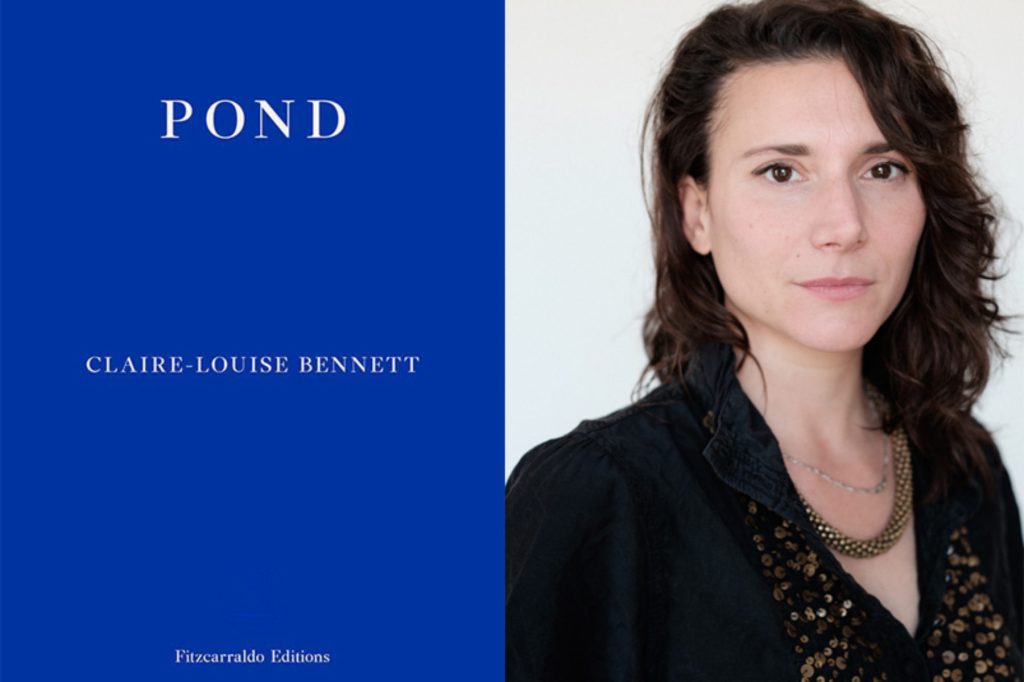
While actively ignoring the commotion on the other side of the window, I am listening to Claire-Louise Bennett speaking to Ben Pester discussing the book Magic and Mechanics published by Scratch Books. It is a collection of six short stories and each attaches an interview about their creative process. Claire-Louise has a voice really suits her face. They are beautiful. She talks about using language without trying to convey a point she find it very exciting. I decide to give her book another try. She finds being persuasive very distant from her self. She brought up a movement originated from Germany – post-dramatic theatre – separating theatre as a live space and drama as a possibility. She then read her passage about clearing brambles in the new book Magic and Mechanics then Ben read his contribution about a parent’s anger dealing with school bullying. They are really good and I am so tempted to buy the book.
Claire-Louise said she writes for herself, the kind of books she would like her younger self about to find. She doesn’t write in the conventional way with plots and characters, they are like short episodes. It just doesn’t happen like that to her and it would be fruitless to pretend any other way. She said she doesn’t feel she is a particularly ‘individual’, to her, the inner, is huge space of something much much broader. When she writes, she participates in something bigger and previous to her. It is not a solitary process, she feels she is participating in this world where words have already been written and things had already been said. I think it is a very beautiful way to talk about writing.
I was reading a short story Control Knob in Claire-Louise’s Pond. I bought Pond when Fitzcarraldo Editions was still nascent, back in 2014, when it was first published. It is not much of a story. Her stories are all not much of a stories, and I was quite new, I couldn’t really understand what was going on. It is nice to have the opportunity to give it another go. Control Knobs is about her very old cooker was not working and she tried to look for the manufacturer that no longer exits. And she also writes about the thoughts and people she came across in her investigative journey looking for replacement parts. In a way, it is very modern, from talking to a customer representative one minute and thinking about digging up the buried dead bodies she perhaps seen on a facebook feed the next, she talked about a book she was reading and misunderstood. I find the details of these mundane moment fascinating – how the oven works, how she witnesses its gradual deterioration, her experience, of lack of, with buying an oven.
In a podcast by Shakespeare & co, the speaker compared Pond with Virginia Woolf’s A Room of One’s Own. Claire-Louise’s writing is an exploration of how a woman should inhabit in the world.
As an English person living in Ireland, there is a sense of lack and exclusion, meanwhile, it is a sense of liberation. She said she never felt a sense of belonging in where she came from, Swindon, so it may as well be feeling not belonged in a foreign place. I really liked this part, which she happened to read in the podcast:
If you are not from a particular place the history of that particular place will dwell inside you differently to how it dwells within those people who are from that particular place. Your connection to certain events that define the history of a particular place is not straightforward because none of your ancestors were in any way involved in or affected by these events. You have no stories to relate and compare, you have no narrative to inherit and run with, and all the names are strange ones that mean nothing to you at all. And it’s as if the history of a particular place knows all about this blankness you contain. Consequently if you are not from a particular place you will always be vulnerable for the reason that it doesn’t matter how many years you have lived there you will never have a side of the story; nothing with which you can hold the full force of the history of a particular place at base.
And it comes at you directly, right through the softly padding soles of your feet, battering up throughout your body, before unpacking its clamouring store of images in the clear open spaces of your mind.
Opening out at last: out, out, out
And shimmered across the pale expanse of a flat defenceless sky.
And the names mean nothing to you, and your name means nothing to them.
Pond, Clare-Louise Bennett
I think this, for now, is the room for me, playing with words, coming back to ideas, contradicting myself, correcting myself.
The speakers discussed about the Irish writer and playwright Samuel Beckett and his diary keeping, about how it appears so mundane and pointless and to be nothing, but this may be is the greatest achievement we can all share in the post-WWII time. I also further listened to how Beckett was compared to Camus. It was fascinating and this discussion of meaning and lack of and resistance is still definitely the centre of my existence. I have never heard of Beckett until now. One window leads to another.
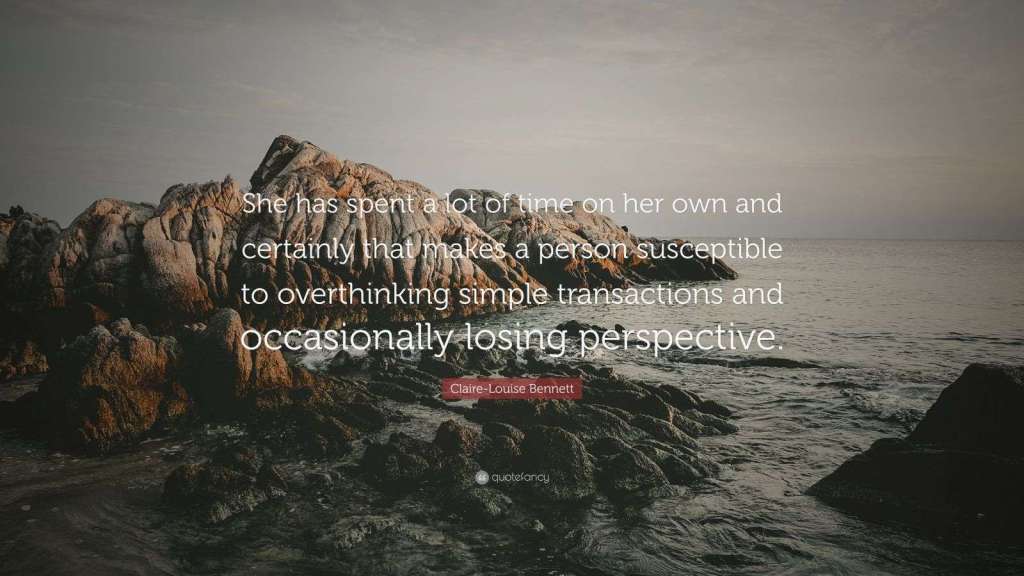
She talked about the awareness of certain environmental problems but being forgiving that she doesn’t know enough to go deep into it, yet still brought up this issue to be the backdrop of her experience. Which I often find a lot more forgivable to others but not when it comes to myself.
I haven’t finished the book. I haven’t had a fully-formed idea. I don’t have a plot. But I suppose I am happy to scratch a mark on today diary’s page and I am not wikipedia or ChatGPT, I don’t have to know all.
Probably will come back to Claire-Louise Bennett again very soon.


Leave a Reply